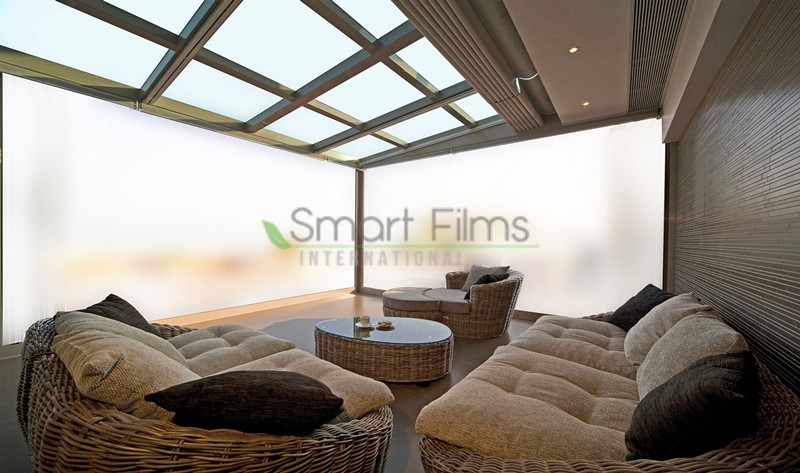
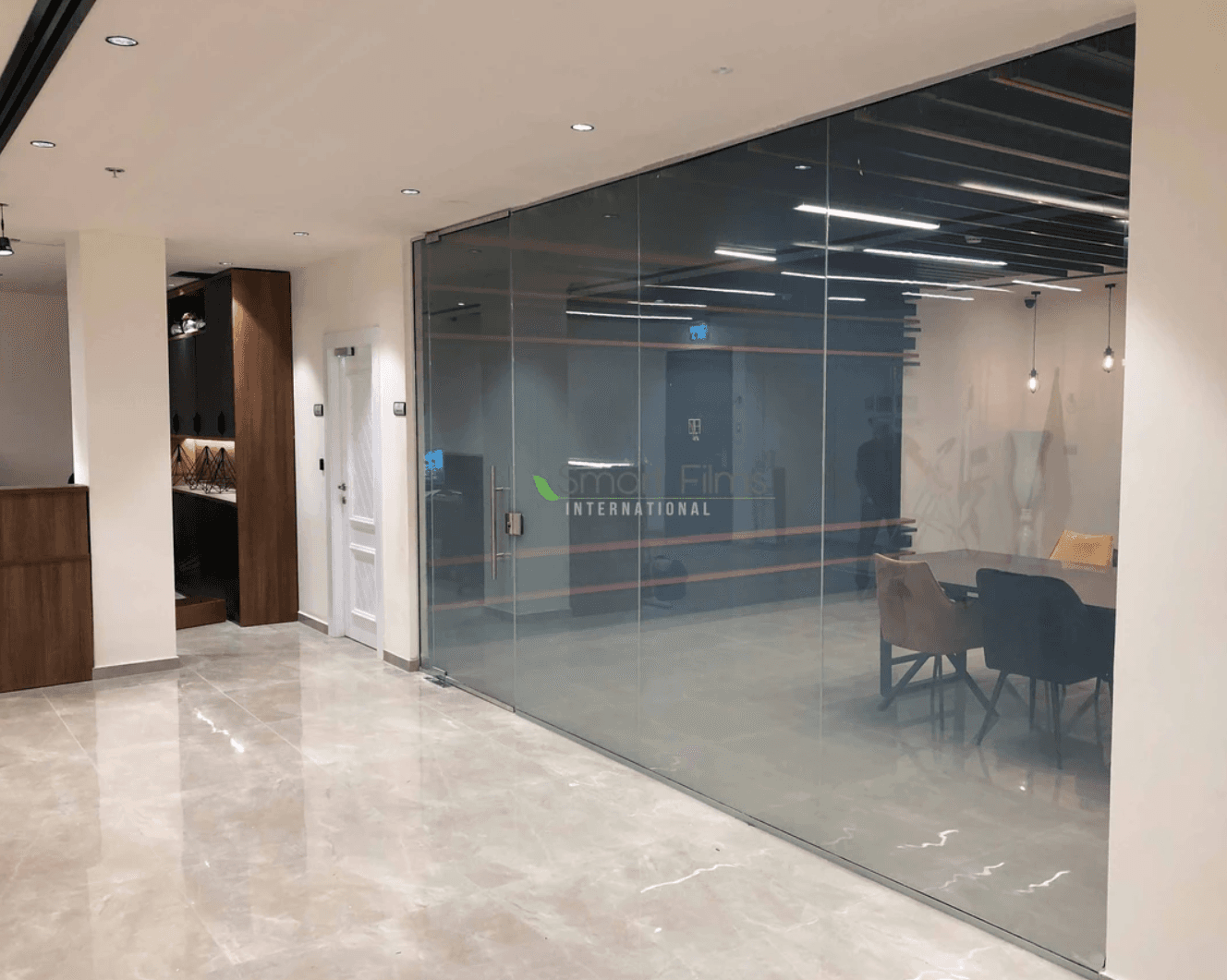
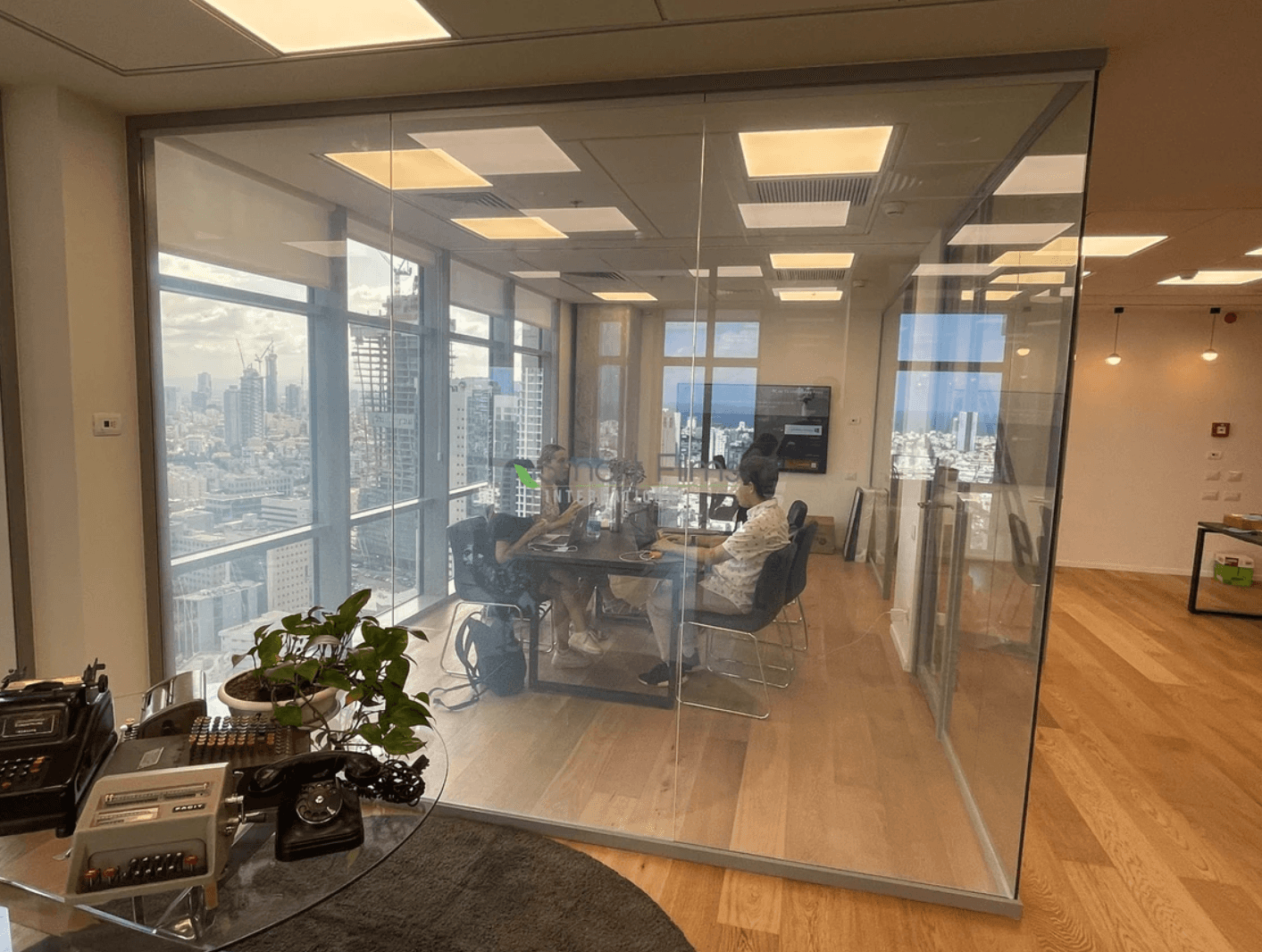
In recent years, the bathroom has evolved into a carefully designed space, no less important than the living room or kitchen. One of the most prominent trends in modern interior design is the use of Smart Glass, which enables full privacy control at the touch of a button. An alternative technology, Adhesive Smart Film—based on PDLC (Polymer Dispersed Liquid Crystal)—can be applied to existing glass and provides a similar effect.
In offices, meeting rooms, or showrooms, adhesive smart film can be a decent and practical solution. But when it comes to bathrooms, the conditions are very different: it’s a humid, high-traffic, and intimate environment. Here, adhesive smart film simply doesn’t perform well. The gap between Smart Glass and Adhesive Film is critical, and understanding this difference is essential to avoid an improvised, short-lived solution.
Why Smart Glass Has Become the Standard in Bathrooms
The growing popularity of Smart Glass in bathrooms is well justified. In modern design, transparency, open flow, natural light, and spatial freedom are key. Smart Glass enables exactly that: a clean, open look when clear, and instant privacy when switched to opaque.
In luxury hotels, boutique apartments, and private homes, Smart Glass has already become the go-to choice. It's a durable, reliable, elegant, and—most importantly—practical technology. Installation is straightforward, maintenance is nearly zero, and the effect is impressive: transparency when you want it, full opacity when you need it. In contrast, Adhesive Smart Film is a temporary solution, intended mainly for dry indoor spaces. It was never designed to withstand the challenges of a wet, high-usage environment like a bathroom.
Advantages of Smart Glass Over Drywall in Bathrooms
Light and Spaciousness. Drywall creates a permanent barrier, blocking light and making the space feel smaller. Smart Glass keeps the space open and airy while giving privacy on demand.
Dynamic Privacy Control. Switch from transparent to opaque instantly—no physical barrier needed.
Easy Cleaning and Maintenance. Smart Glass is just like any other window in terms of cleaning. There’s no paint, no risk of mold, and no long-term wear. Drywall, on the other hand, absorbs moisture and deteriorates.
Smart Integration. Smart Glass integrates easily with home automation systems—controlled via app, switch, or remote.
Long Product Lifespan. Smart Glass lasts over 20 years, providing consistent performance and value.
Where Is Adhesive Smart Film Actually Suitable?
Let’s be clear—Adhesive Smart Film is not a bad product in general. In the right setting—such as offices, boardrooms, display rooms, exhibitions, or interior dry partitions—it’s a viable, affordable, and often effective solution. However, the moment it’s installed in a wet space like a bathroom, it becomes unsuitable. Moisture, steam, and physical exposure degrade the film over time, leading to visible damage, reduced performance, and eventually—costly replacements.
Comparison Table: Adhesive Smart Film vs. Smart Glass in Bathrooms
Item
Smart Glass (Laminated / Triplex)
Adhesive Smart Film
Transparency
Very high, with slight haze on side angles
Very high, with slight haze on side angles
Moisture Resistance
Excellent – sealed PDLC layer embedded in glass
Poor – film edges absorb moisture, creating permanent stains
Installation
Simple – standard glass installation by any glazier
Complex – requires dry application, very few skilled installers
Lifespan
Over 20 years
Up to 10 years, often less in humid environments
Cost
30% more than adhesive film, but more cost-effective long-term
Lower upfront cost, but high maintenance costs later on
Maintenance
Minimal – cleaned like standard glass
Sensitive – standing water at edges causes irreversible stains
Hotel Usage
Ideal – highly durable for frequent guest use
Problematic – prone to damage from moisture or guest mishandling
Aesthetic Appearance
Premium – clean, modern look with hidden wiring
Makeshift – visible wires, additional profiles, cluttered appearance
Privacy Control
Full – integrates seamlessly with smart home systems
Full control – smart integration possible, but depends on setup
Full Opacity
Yes
Yes
Design Flexibility
High – customizable with prints, tints, and finishes
Limited – fewer options, less compatible with premium designs
Conclusion
Adhesive Smart Film is not a sufficient solution for bathrooms. It may be appropriate for office interiors, but it is not built for wet environments. While it may seem affordable at first, it often turns into a non-professional, patchwork solution.
Most installations involve extra framing, visible wiring, and eventually moisture exposure—leading to unsightly stains that cannot be removed.
For those considering applying adhesive film over existing glass to save money—our clear recommendation is: don’t do it. Disappointment is almost guaranteed; it’s only a matter of time.
Instead, invest in replacing the entire panel with genuine Smart Glass—an elegant, durable, aesthetic, and long-term solution that will serve you reliably for many years.
FAQ
What’s the main difference between Smart Glass and Adhesive Smart Film?
Smart Glass embeds the PDLC layer inside the glass; Adhesive Film is stuck on externally and exposed to damage.
Is Adhesive Smart Film suitable for bathrooms?
No. Moisture and humidity will damage it quickly and cause permanent staining.
How does the price compare between Smart Glass and Adhesive Smart Film?
Smart Glass is about 30% more expensive than clear glass + film, but offers much higher durability and quality.
Can Smart Glass be cleaned with water?
Absolutely—it’s regular glass when it comes to cleaning.
How does Adhesive Film handle humidity?
Very poorly—moisture weakens the edges, causes peeling, and may damage the base glass.
Why is Smart Glass better in hotels or private homes?
It’s durable, requires no maintenance, and offers a clean, modern look with high reliability.
Does Adhesive Smart Film look the same as Smart Glass?
t tries to, but lacks the seamless finish—wires and extra framing are often visible.
Can I add Adhesive Smart Film to existing glass in a bathroom?
No. It’s not recommended. Replace the glass with Smart Glass for a long-term solution.